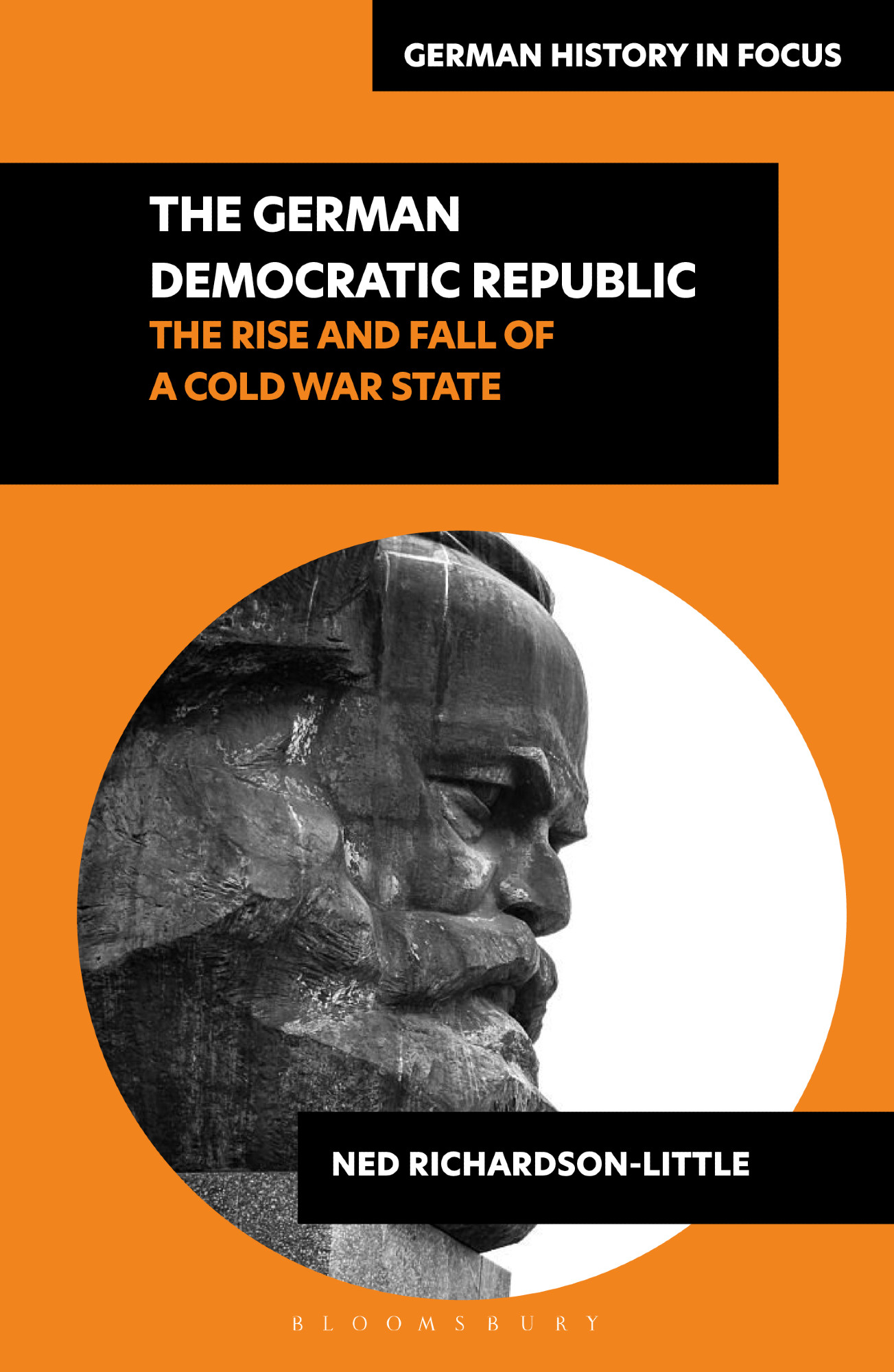
The German Democratic Republic: The Rise and Fall of a Cold War State
Forthcoming with Bloomsbury Academic 2025
This book is a succinct yet comprehensive history of East Germany which provides a differentiated picture of the communist state. It offers a sophisticated analysis of life under dictatorship which candidly confronts the abuses of the East German Communist Party (SED) and the Stasi state security service. Ned Richardson-Little delves into the central contradictions of the GDR as a state meant to overcome the horrors of the Third Reich and create a new utopia, while itself a brutal dictatorship. He also convincingly argues that while the existence of the GDR was a product of the Cold War, it was also entangled in international politics well beyond the rivalry between the United States and the Soviet Union. In this way, the book offers a history of the GDR in a global perspective that illustrates the worldview of those who ruled it, those who rebelled against the strictures of state socialism, and those in between who sought a normal life under dictatorship.
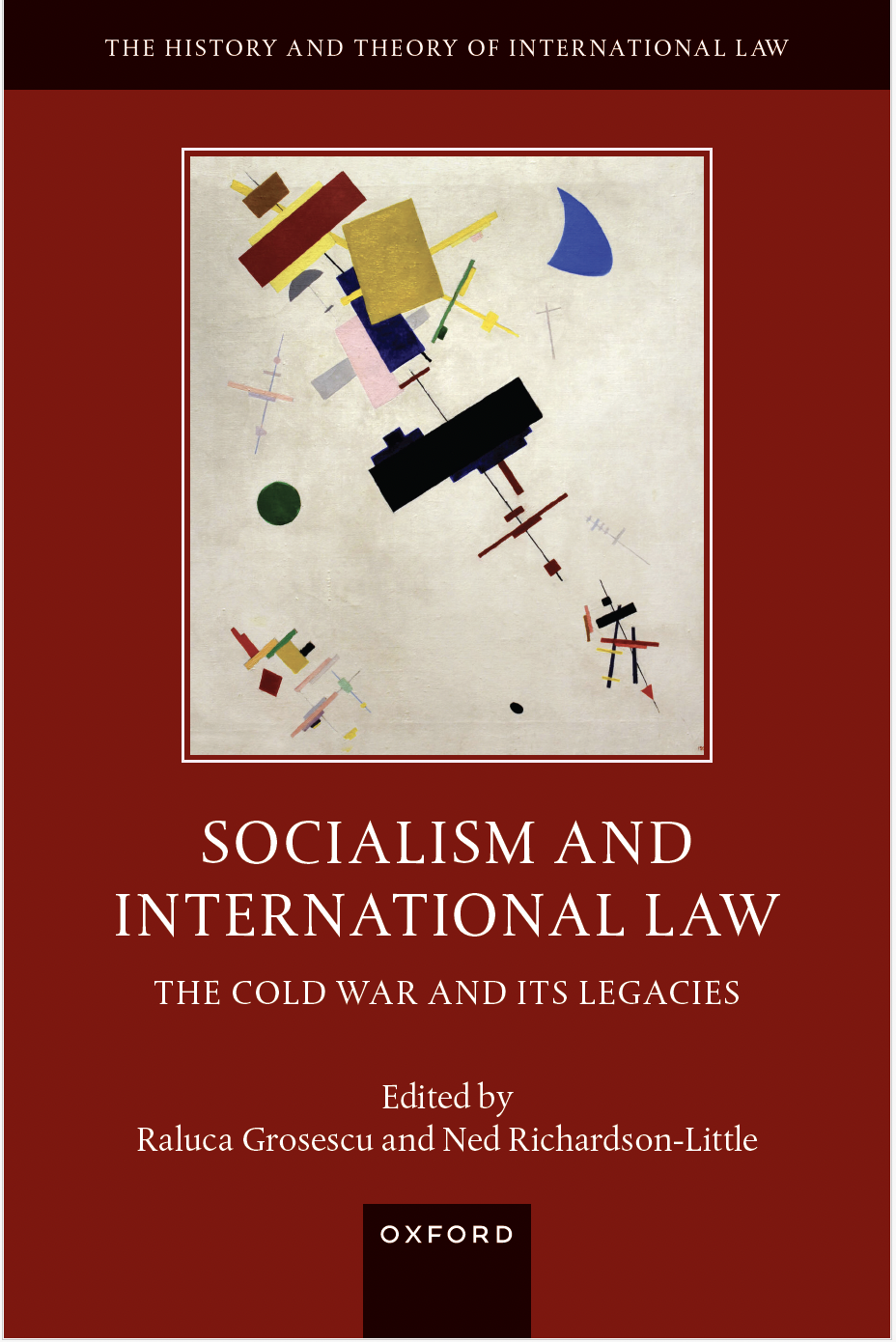
Socialism and International Law: The Cold War and Its Legacies
Oxford University Press, 2025
The socialist world of the 20th century was an ambiguous and fragile construct: there were clear divisions between the Soviet-led Eastern Bloc, which kept one foot in Western Eurocentric traditions, and the positions of the radical Third World, primarily post-colonial Afro-Asian states, which mounted a more fundamental challenge to the international order. Far from a monolith, the socialist world was an intricate and dynamic space, which still had many shared common understandings of global affairs and the meaning of the law within them.
By examining how different state socialist ideologies, legal principles, and realpolitik affected contemporary international law frameworks, this book contests existing linear and Western-dominated histories. It considers these state socialist engagements in conversation with liberal and Western approaches and underlines the divisions that existed between versions of socialism from different regions and across the North-South divide. The legacies of socialist international law are still with us today, as are the consequences of its failure.
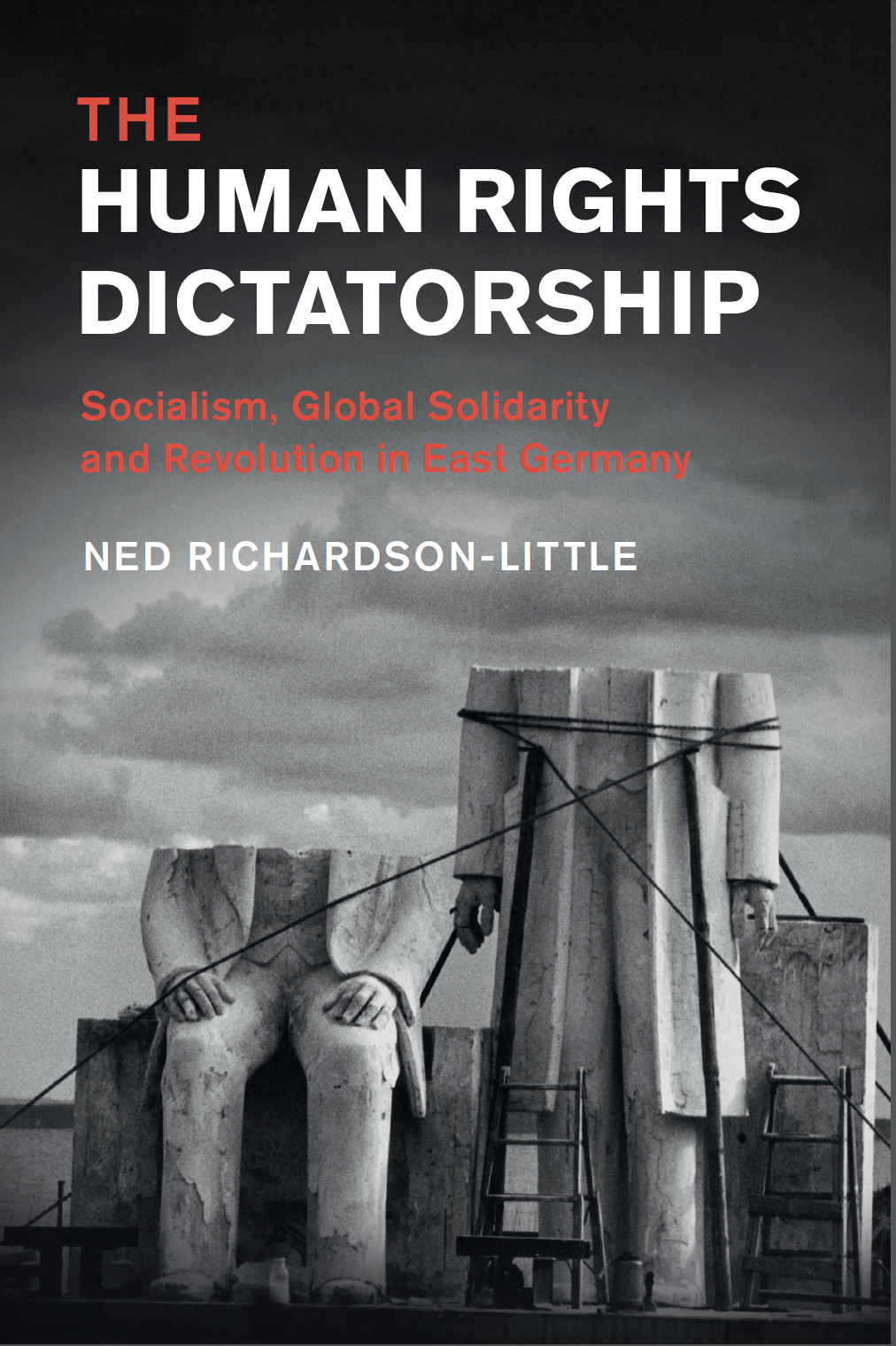
The Human Rights Dictatorship: Socialism, Global Solidarity and Revolution in East Germany
Cambridge University Press, 2020
Richardson-Little exposes the forgotten history of human rights in the German Democratic Republic, placing the history of the Cold War, Eastern European dissidents and the revolutions of 1989 in a new light. By demonstrating how even a communist dictatorship could imagine itself to be a champion of human rights, this book challenges popular narratives on the fall of the Berlin Wall and illustrates how notions of human rights evolved in the Cold War as they were re-imagined in East Germany by both dissidents and state officials. Ultimately, the fight for human rights in East Germany was part of a global battle in the post-war era over competing conceptions of what human rights meant. Nonetheless, the collapse of dictatorship in East Germany did not end this conflict, as citizens had to choose for themselves what kind of human rights would follow in its wake.
- Review in German History by Peter Caldwell
- Review in Süddeutsche Zeitung by Annette Weinke
- Review in H-Russia by Samantha Clarke
- Review in Central European History
- Review in Diplomatic History


“Arms Intervention: Weimar Germany, Imperial Influence and Weapons Trafficking in Warlord China,” Journal of Modern European History (19:4, 2021, 510-528)
“Transnational Drug Trafficking and the German Embrace of International Narcotics Law from the Kaiserreich to the Nazis” in Dietmar Müller and Katja Naumann (eds.) Transregional Connections in the History of East Central Europe (De Gruyter, 2021)
“‘Hashers Don’t Read Das Kapital’: East Germany, Socialist Prohibition, and Global Cannabis,” in James Mills and Lucas Richert (eds.) Cannabis: Global Histories (MIT Press, 2021)
(Re-)Constituting the State and Law during the ‘Long Transformation of 1989’ in East Central Europe. Special Issue Journal of Modern European History (18:3, 2020) Co-edited with Michal Kopeček
“The History of the End of History”, in “Debate on Philipp Ther’s Europe since 1989,” East Central Europe. (47: 2-3 2020)
“Who is the Volk? PEGIDA and the Contested Memory of 1989 on Social Media,” co-authored with Samuel Merrill in Samuel Merrill, Emily Keightley & Priska Daphi (eds.) Social Movements, Cultural Memory and Digital Media. Mobilising Mediated Remembrance (Palgrave Macmillan, 2020)
“Was ist los in Erfurt? The East German Past and the Democratic Crisis of the Present/ Die ostdeutsche Vergangenheit und die demokratische Krise der Gegenwart,” Geschichte der Gegenwart (February 19, 2020)
“From Tehran to Helsinki: The International Year of Human Rights 1968 and State Socialist Eastern Europe,” Diplomatica: A Journal of Diplomacy and Society (1:2, 2019)
“Abolishing the Exploitation of Man by Man: Socialism and Human Rights since Marx,” in Annette Weinke and Dieter Gosewinkel (eds.) Menschenrechte und ihre Kritiker: Ideologien, Argumente, Wirkungen (Wallstein, 2019)
Special Issue of East Central Europe (2-3, 2019): with Hella Dietz and James Mark New Perspectives on Socialism and Human Rights in East Central Europe since 1945
- Introductory article with Hella Dietz and James Mark New Perspectives on Socialism and Human Rights in East Central Europe since 1945 Introduction to the Thematic Issue
- Article: The Failure of the Socialist Declaration of Human Rights: Ideology, Legitimacy, and Elite Defection at the End of State Socialism
Special Issue of the Journal of the History of International Law (02/2019): with Raluca Grosescu Revisiting State Socialist Approaches to International Criminal and Humanitarian Law
- Introductory article: with Raluca Grosescu Revisiting State Socialist Approaches to International Criminal and Humanitarian Law: An Introduction
- Article: The Drug War in a Land Without Drugs: East Germany and the Socialist Embrace of International Narcotics Law
“Human Rights, Pluralism and the Democratization of East and West Germany,” in Harald Wenzel, Konrad Jarausch, and Karin Goihl (eds), Different Germans, Many Germanies: New Transatlantic Perspectives (Berghahn, 2016).
“Human Rights as Myth and History: Between the Revolutions of 1989 and the Arab Spring,” Debatte: Journal of Contemporary Central and Eastern Europe, (23:2-3, 2015, 151-166).
“Between Dictatorship and Dissent: Ideology, Legitimacy and Human Rights in East Germany, 1945-1990,” German Historical Institute Bulletin 56 (Spring 2015)
“Dictatorship and Dissent: Human Rights in East Germany in the 1970s,” in Jan Eckel and Samuel Moyn (eds.) The Breakthrough: Human Rights in the 1970s (Uni of Pennsylvania Press, 2014).
“‘Erkämpft das Menschenrecht’: Sozialismus und Menschenrechte in der DDR in der 70er Jahre,” in J. Eckel and S. Moyn (eds.) Moral für die Welt?: Menschenrechtspolitik in Den 1970er Jahren (Vandenhoeck & Ruprecht, 2012).
 Ned Richardson-Little